
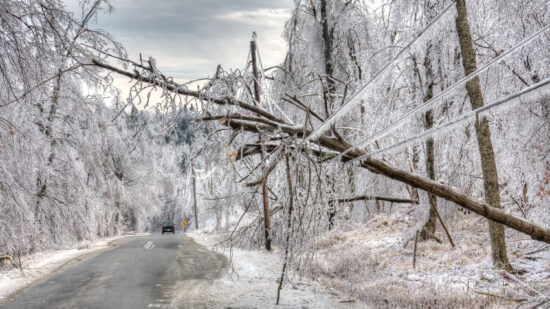
As the great thaw is underway across much of the country, Winter Storm Fern is now poised to be the most expensive weather event to hit the U.S., with economic losses estimated to surpass $100 billion. In addition to physical damage to homes, businesses, and critical infrastructure from direct impacts of ice, snow, wind, and widespread power outages, the storm has crippled commercial operations with interruptions to normal business operations, critical supply chains, and shipping channels.
Business interruption (BI) insurance, also known as business income or time element insurance, generally provides coverage for lost income and continuing expenses while an organization’s operations are shut down or limited following physical damage from a covered cause of loss. A business physically damaged by an ice storm, for example, may utilize BI insurance to replace its lost income while repairs are made. Contingent business interruption (CBI) insurance covers lost income and continuing expenses following damage to another organization on which the policyholder’s business depends, such as a key supplier or customer. This coverage is typically obtained in conjunction with a commercial property policy. Other coverages, such as debris removal and losses from lack of access due to closures by civil authorities, may also be included.
To trigger coverage, the policyholder must establish physical loss to property from a covered cause of loss. Standard business income coverage forms generally require that the suspension of the insured’s operations must “be caused by direct physical loss of or damage” to the insured premises. The location where the damage must occur varies depending on the type of coverage. For business interruption, the physical loss must occur to the policyholder’s property, whereas for contingent business interruption, the loss must occur to the supplier, customer, or other organization.
A prompt recovery of insurance proceeds depends on taking the following actions now:
- Read your policies to determine the available coverage, paying careful attention to policy limits, endorsements, and exclusions.
- Review your policies’ notice requirements. Feel free to discuss with your broker but err on the side of notifying your insurer even if you aren’t sure if you truly have a claim. Notify your property insurers of your claim now even though the full extent of your loss may be unknown.
- Document and track your ongoing losses, including such items as extra expenses incurred to mitigate your losses, overtime expenses, payments to third-party consultants or experts, and lost profits. The more detail provided the better.
- Continue to engage regularly with the adjuster or other claims personnel your insurer appoints to handle your claim. Be a squeaky wheel and document your communications. Be careful in accepting an unfavorable response at face value — especially in a widespread loss situation like Winter Storm Fern.
- If needed, don’t hesitate to engage a policyholder coverage lawyer to assist you in understanding your coverage and how to document your losses, as well as how to engage with the insurance adjuster.
Losses from disasters like Fern require intense focus to keep your business and your customer and contractor relationships afloat. The addition of insurance red tape and delays in payments can be overwhelming.
Taking these steps now are the keys to a successful insurance recovery to minimize your storm-related disruptions as much as possible.